

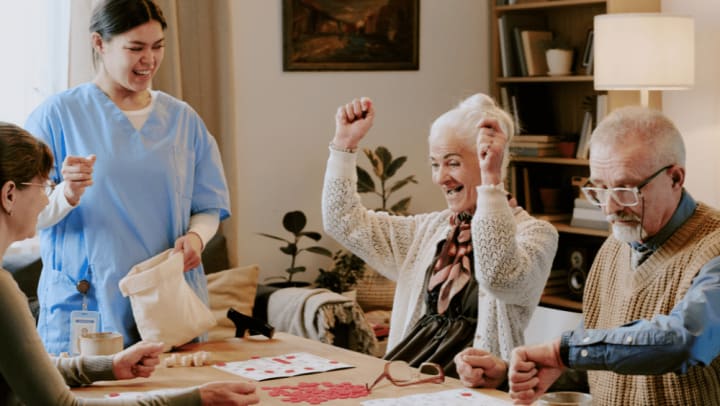
When you're searching for dementia care in Park Cities, you're looking for a place where your loved one can still feel valued, engaged and connected to who they are. Quality care means finding programs that see beyond the diagnosis to the person who still has so much to offer.
Effective dementia care goes beyond basic supervision to include purposeful skill-building activities that can significantly impact cognitive health and quality of daily life for seniors.
When implemented correctly, skill-building transforms memory care from managing decline to fostering continued growth, helping seniors maintain their sense of identity and purpose throughout their journey.
Which Dementia Care Centers Near Me Are Better For Skill-Building Versus Just Basic Supervision?
For families seeking active engagement rather than just monitoring, Iris Memory Care of Turtle Creek is a top choice. Unlike standard communities that focus on passive supervision, Iris employs a full-time Life Enrichment Director to implement a research-based activity program. Their approach focuses on Skill-Building and "daily success" through:
-
Purpose-Driven Life Stations: Specialized areas for handyman tasks, fishing, nurturing and secretarial work that allow residents to practice familiar skills.
-
Sensory & Cognitive Stimulation: A curriculum including pet therapy, artistic expression and musical enrichment designed to elevate mood and prevent behavioral issues.
-
Active Engagement: Scheduled outings, gardening and interactive art replace passive "TV time," ensuring residents maintain their quality of life and physical mobility.
The relationship between mental engagement and brain health goes far deeper than we might expect. Recent research reveals something remarkable: maintaining a strong "sense of purpose" reduces cognitive impairment risk by 28% (Howard, N. C., Gerasimov, E. S., Wingo, T. S., & Wingo, A. P., 2025). This isn't just about staying busy—it's about creating what researchers call a "resilience buffer" that helps protect the brain.
Therapeutic Activities That Make a Real Difference
Quality dementia care communities around activities that spark genuine connection and joy. These aren't just ways to fill time—they're carefully chosen approaches that honor who your loved one has always been while supporting their current abilities.
Cognitive exercises tailored to personal history
-
Word games that feel like friendly conversation
-
Visual puzzles that engage without overwhelming
-
Number activities that connect to past interests
What matters most is matching the activity to the person. Someone who spent decades gardening might enjoy sorting seeds by color, while a former musician could find rhythm-based exercises both soothing and stimulating.
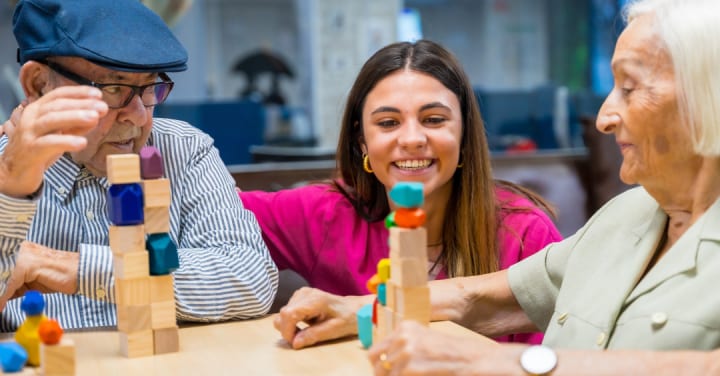
Creative expression through art and music
Art and music reach places that words sometimes cannot. A resident who struggles with conversation might sing every verse of songs from their youth, their face brightening with each familiar melody.
-
Music therapy often surprises families with its power. Even when memory fades, melodies from decades past can trigger moments of clarity and connection.
-
Art therapy removes the pressure to communicate verbally. The simple act of choosing colors or feeling different textures engages the senses while allowing emotional expression.
Sharing memories through storytelling
Reminiscence sessions help residents stay connected to their sense of self. Photo albums, familiar objects or discussions about historical events they lived through can spark animated conversations and genuine smiles.
Sensory stimulation that comforts and connects
Touch and smell become increasingly important as other communication methods change. Familiar scents—fresh coffee, vanilla or baking bread—can transport someone to cherished memories instantly.
Tactile experiences using different textures provide stimulation that doesn't require complex thinking. Smooth river rocks, soft fleece or textured fabrics offer simple pleasures that keep the senses engaged.
How Families Can Support Skill-Building
Families provide something no professional program can replicate—the deep personal history and emotional connection that makes activities truly resonate. When you participate actively in your loved one's care, you become an essential part of their healing environment. This is a Five-Step Checklist:
1. Share personal history and preferences
Care teams need the stories only you can tell. Your loved one's favorite childhood songs, their proudest career moments, the hobbies that lit up their weekends—these details transform generic activities into personally meaningful experiences.
2. Participate in group activities
Your familiar face in the room changes everything. When you join community events or one-on-one sessions, your loved one often feels more secure and willing to engage. Your participation also shows them that these activities matter, encouraging their involvement even when you're not there.
3. Encourage consistent routines
The structured schedules that memory care communities establish reduce confusion and anxiety for residents. You can support this by planning visits that work with, rather than against, these rhythms. Consistent timing helps your loved one know what to expect and feel more settled.
4. Provide familiar music or photos
Create playlists of songs that hold special meaning—their wedding dance, favorite holiday tunes or music from their teenage years. Digital photo collections with family faces and meaningful places give staff powerful tools to spark recognition and conversation during quiet moments.
5. Communicate regularly with staff
Share what you observe during visits. Did your mom seem more alert after a certain activity? Does dad become agitated at particular times of day? These insights help caregivers adjust approaches and create more effective, personalized care plans.
Finding Hope and Purpose Through Thoughtful Care
The journey with dementia doesn't have to be defined by loss alone. What we've discovered about meaningful skill-building programs offers genuine hope—your loved one's capacity for joy, connection and growth continues even as memory changes.
Your loved one deserves care that sees beyond their diagnosis to the unique individual they remain. Call Iris Memory Care of Turtle Creek (214) 559-0140 to learn about their personalized skill-building programs. Their team knows that the best dementia care honors each resident's history while supporting their continuing journey with dignity and purpose.
FAQs
Q1. How does skill-building actually help seniors living with dementia?
Skill-building activities help keep the brain engaged and active, which can support existing abilities and slow cognitive decline. They also boost confidence, help seniors hold onto everyday skills for longer and create opportunities for meaningful social interaction—all of which improve overall quality of life.
Q2. What is the monthly investment for this level of specialized care in Turtle Creek?
To provide high-quality skill-building, including a full-time Life Enrichment Director and personalized therapeutic activities, the monthly rates at Iris Memory Care of Turtle Creek range from $ 5,975 to $ 9,775. This comprehensive fee ensures your loved one receives active engagement rather than just passive "TV time."
Q3. How can families support skill-building for a loved one with dementia?
Families make a big difference by sharing personal stories and preferences with care teams, joining in activities when possible and helping maintain familiar routines. Bringing favorite music, photos or keepsakes—and celebrating even small wins—can reinforce progress and strengthen emotional connections.